Garbage truck financing is a loan or equipment finance agreement that lets a hauling company buy a new or used refuse truck and repay it over a set term, with the truck itself typically serving as collateral. For a private hauler or small waste operator, it spreads a large purchase into scheduled payments that the truck's routes can help cover.
The demand behind those routes is large. The EPA's most recent national figures, for 2018, show that the US generated 292.4 million tons of municipal solid waste in 2018, or 4.9 pounds per person per day, and collecting it from curbs and dumpsters is the work refuse trucks do. For a small operator, one more truck can open a new subdivision, commercial account or recycling route.
How garbage truck financing works
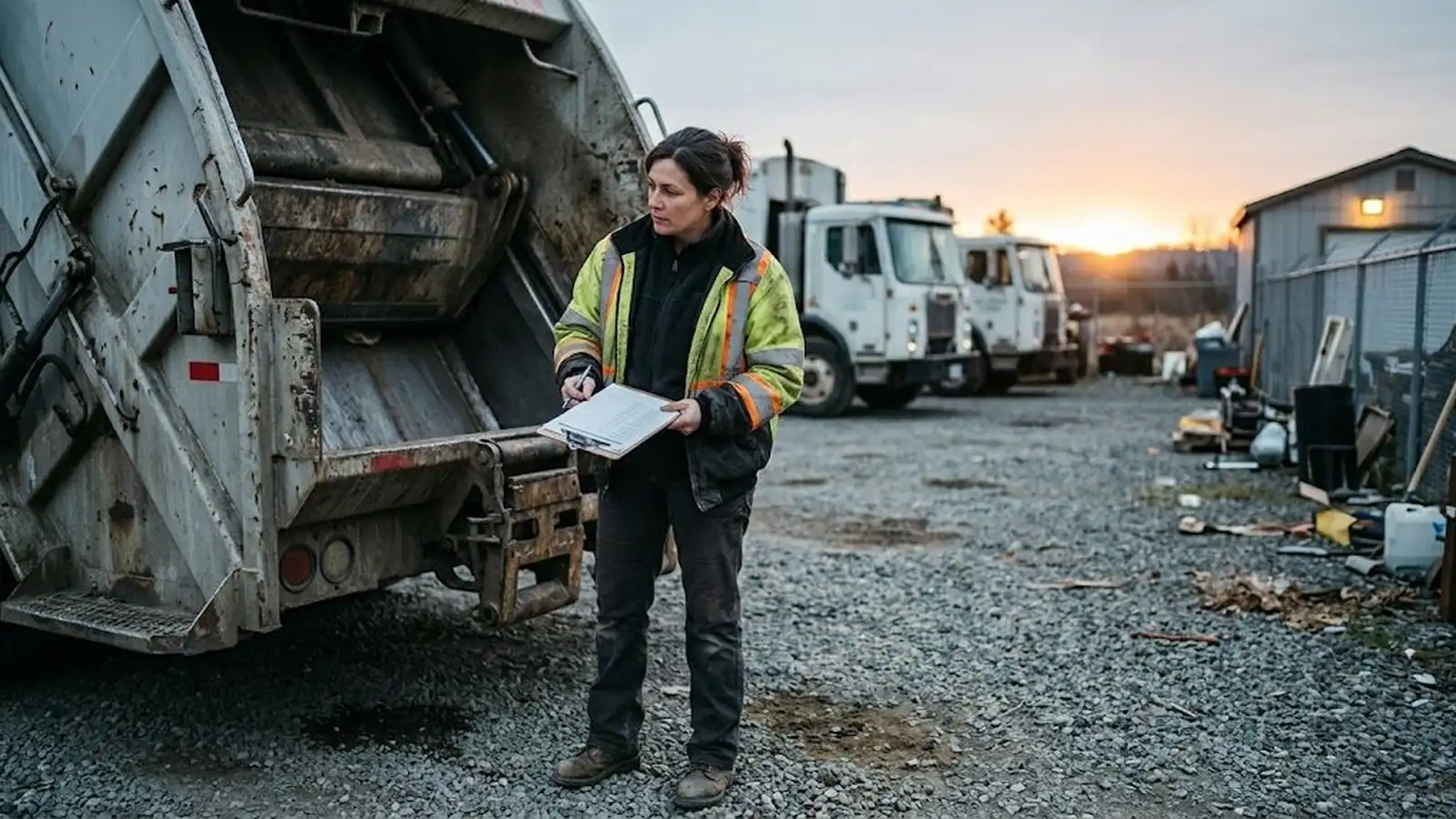
A refuse truck is two pieces of equipment joined together: a heavy-duty chassis with the cab, engine and drivetrain, and a body that collects, compacts or carries the waste. The two can come from different manufacturers and are sometimes bought from different sellers, with a chassis dealer supplying the truck and a body dealer or upfitter mounting the packer.
That structure shapes the paperwork. A complete truck from one dealer can be covered by a single quote and financed as one asset. When the chassis and body are bought separately, lenders handle it in different ways, which may include one agreement covering both quotes or separate payments to each vendor. Ask early how a lender handles a two-vendor purchase, since payment timing can affect when the truck is ready to run.
On FundBetter's equipment financing program, the equipment typically serves as the collateral, and repayment terms run from one to six years, matched to the useful life of the asset. Many programs cover up to 100 percent of the cost, and FundBetter says deals are often done with nothing down, though some include a small down payment. Soft costs such as delivery, installation and sales tax can be rolled in on many programs, though some cap them, and they can sometimes add 10 to 20 percent on heavy equipment.
Under FundBetter's equipment financing, the business owns the truck from day one, subject to the lender's security interest, and maintenance and repairs are the owner's responsibility. A lease works differently: ownership and end-of-term options depend on the lease agreement.
Refuse truck body types and what each one means for a lender
The body determines what work the truck can do and which parts take the most wear, which is also where an inspector or lender may look hardest on a used unit.
| Body type | Common work | Areas worth a close look |
|---|---|---|
| Rear-loader | Residential and light commercial routes, bulk items, loaded by hand or with cart tippers at the hopper | Packer blade and sweep panel, hopper floor wear, tailgate seals and lift cylinders |
| Front-loader | Commercial routes servicing dumpsters lifted over the cab on forks | Fork arms and pivots, lift cylinders, body floor and walls, cab guard |
| Side-loader, manual | Residential routes where a driver loads carts or bags from the curb side | Hopper and packer wear, step and cab access, compaction cycle |
| Automated side-loader | Residential cart routes where the driver picks up carts with a mechanical arm | Arm, gripper and boom wear, arm hydraulics and controls, cameras and sensors |
| Roll-off truck body | Hauling roll-off containers and compactors on a hauler's commercial and industrial accounts | Hoist or hook lift cylinders, cables or hook, rails and subframe |
Body choice can also affect resale value, which is worth weighing on a truck you may sell later. A roll-off truck bought for a hauler's own routes is one more refuse configuration and may go through the same equipment financing program.
Buying a used garbage truck: condition and inspection
FundBetter lists used equipment among what can be financed. The trade-off is in the terms: FundBetter says to expect a shorter term and a somewhat higher rate, that age caps are common on some categories, and that hours or mileage matter.
For a garbage truck, hours and miles tell different stories. A route truck can make hundreds of stops a day, idling and running its hydraulics at each one, so the engine and power take-off can build up wear the odometer does not show. Ask for engine hours alongside mileage, plus any separate hour meter reading for the body or power take-off. Modest miles with heavy hours may mean a rebuild is closer than it looks.
The body can need as much attention as the chassis. A mechanic who knows refuse bodies may check the hydraulics: cylinders for leaks or scoring, hoses and fittings for seepage, and the pump for noise or slow cycle times. Inside the body, look for cracked welds, thin spots in the floor and hopper, and wear on the packer blade and guide rails. Cycle an automated arm several times and watch for drift, and run a roll-off hoist through a full load and unload. Maintenance records, rebuild invoices and any history of remounting the body help a buyer and a lender judge what is left in the truck.
Where the truck is bought also changes the paperwork. FundBetter says that on a dealer purchase the funds go directly to the dealer, and the buyer has an invoice, serial number and clear title. A private-party purchase, such as buying from another hauler that is downsizing, is described as "harder, but not impossible," takes longer than a dealer purchase, and calls for a bill of sale, clear title with no lien, photos, serial or VIN verification and possibly an inspection or appraisal. An independent inspection by a mechanic who knows packer bodies may help answer a lender's questions and show the buyer what repairs may be coming.
What lenders review before financing a refuse truck
FundBetter's equipment criteria start at one or more years in business, a personal credit score around 500 or higher, and a vendor quote or invoice for the truck. FundBetter says the quote is what moves things fastest, and that with one in hand a decision usually comes within a single business day. Funding can arrive in as little as 24 hours, which FundBetter describes as the fastest case rather than a typical timeline.
FundBetter adds that lenders check whether current revenue can support the new payment alongside existing obligations. For a hauler, bank statements showing steady collections, a customer list, and service contracts with businesses, property managers or homeowner associations can help show where the payment will come from. If the truck is tied to a new route or contract, bring that agreement with the quote.
Imagine a hypothetical three-truck hauler, four years in business, that wins a contract for a new subdivision. The owner gets a dealer quote on a used automated side-loader, collects its engine hours and maintenance history, and has a mechanic inspect the arm and hydraulics. With the quote, inspection report, bank statements and contract in one file, the lender can see the asset, its condition and the revenue meant to cover it.
FundBetter says the rate depends on the asset, its age and condition, and the business profile. Early payoff terms vary too, since some contracts set a fixed total cost and some charge a prepayment fee, so ask about payoff and any documentation or origination fee before signing. The business loan calculator lets you test a loan amount, term and annual interest rate to see the payment and total repaid, and FundBetter's guide to business loan requirements covers the broader set of checks lenders make.
Finance Your Next Refuse Truck with FundBetter
FundBetter is a national small business lender and funding marketplace, founded in 2018 and based in Miami. It may fund directly or connect a business with third-party lenders and funding partners, depending on which is the better fit, with funding from $5,000 to $5 million across eight products. Equipment financing has its own starting points, which differ from the general working capital minimums: one or more years in business, a personal credit score around 500 or higher, and a quote or invoice for the equipment being purchased. Terms run from one to six years and are matched to the useful life of the asset, and many programs cover up to 100 percent of the cost. Those are FundBetter's criteria rather than general lending requirements, and they vary by product. Checking your options uses a soft inquiry that does not affect your credit score; a hard inquiry happens later, with your permission, only on certain offers.
Haulers adding or replacing a rear-loader, front-loader, side-loader or roll-off truck can start with equipment financing, which covers new and used equipment, with the equipment typically serving as the collateral. A hauler facing a quick repair or replacement to keep a route running, such as a hydraulic pump or a body rebuild, may look at a short-term business loan instead.
Have the dealer quote, or the seller's paperwork on a used truck, ready when you begin. See what you qualify for, and if you are buying the chassis and body from separate vendors or buying from another hauler, call us at 786-882-2705 so we can talk through how the purchase could be structured.