Salon Business Loans
Add chairs, restock the shelves, and grow your clientele with fast, flexible funding for salons, spas, and beauty pros.
Two minutes to see your options, and your credit file stays untouched while you look.
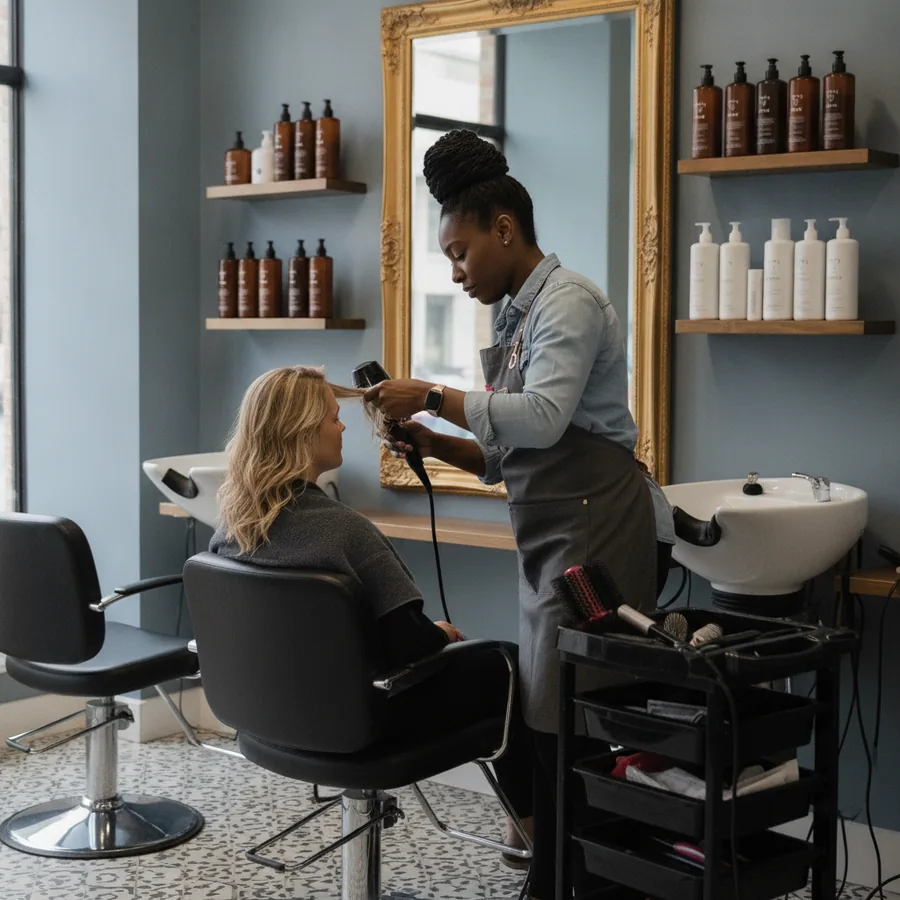
Business loans for salons and spas
Your beauty business runs on your space, your people, and your product. Rent the extra station, hire the stylist with a following, restock the color line, and the revenue follows. Those investments come out of your pocket before the bookings fill in, and a quiet stretch after the holidays or wedding season can leave the register thin, so FundBetter fronts the move for you.
FundBetter gives you funding that keeps up with a fully booked calendar. Make those moves now and repay as the appointments roll in. One application reaches advisors who understand how chair and suite revenue behaves.
Why salons and spas need working capital
Adding chairs and talent
Funding lets a new stylist or an extra treatment room lift your revenue right away, even though the hiring and buildout costs land months before the chair pays for itself.
Retail and product stock
Funding keeps the color line, skincare, and retail shelves stocked without tying up cash, especially before a busy season.
Seasonal booking dips
A line of credit smooths the quiet weeks, so you're ready when clients return even as business slows after the holidays and between wedding seasons while rent and stylist pay stay the same.
How salon and spa revenue shapes your funding options
How you staff your chairs changes the shape of your revenue, and lenders read that shape closely. A booth rental shop collects fixed rent from each stylist. That income is steady and easy to document, but it caps your upside: the shop earns the same whether a stylist bills $800 or $3,000 that week. A commission shop takes a percentage of every service instead, so revenue rises with a busy calendar and payroll rises with it. The difference shows up in a slow February: booth rent is still due, while commission revenue falls with the bookings.
Neither model borrows better, but they suit different products. Booth rent behaves like predictable lease income, which supports the fixed payments that long-term business loans carry. Commission revenue moves week to week, which is why those owners often prefer a business line of credit or a repayment that flexes with card volume.
Buildout is where salon costs separate from most retail. A styling station needs power, a mirror wall, and cabinetry. A shampoo bowl needs supply lines, a drain, and a floor that can be opened. Treatment rooms need partitions and ventilation. Fit-out per square foot runs well above a shop that only needs shelves and a register, and almost none of it moves with you when the lease ends.
Then there's retail. The color line, the skincare, and the shelf product are a second inventory-funded business inside the first. Product is bought by the case months before it sells, and a discontinued shade turns into cash on a shelf. Service revenue funds itself the day the client sits down. Retail doesn't, and that gap is why a fully booked salon can still feel tight.
Equipment financing vs. a short-term business loan
These two cover most salon borrowing and aren't interchangeable, so choose right. The difference is whether you're buying an asset or covering a gap.
| Salon equipment financing | Short-term salon loan | |
|---|---|---|
| What it funds | Chairs, shampoo units, dryers, treatment tables, a laser or body contouring device | Payroll, rent, retail inventory, marketing, buildout labor, a slow month |
| Typical term | 2 to 5 years, matched to the useful life of the gear | 3 to 18 months, repaid daily or weekly |
| Collateral | The equipment secures the deal, so no separate collateral is needed | Usually unsecured, backed by a personal guarantee |
| Speed | Days, since the lender values the asset and often pays the supplier | As little as 24 hours once your statements are in |
| Cost profile | Lower cost spread long, so the payment stays small | Higher total cost, but paid off within months |
| Who it suits | A salon or med-spa buying a device that will earn for years | A shop covering a seasonal dip or a reorder that will not wait |
What salons, spas, and barbershops finance
These purchases put your funding to work most often on a salon application.
Styling stations and chairs
Add earning capacity with a full station: chair, mirror, cabinetry, and electrical run a few thousand dollars before labor. Adding two is a real capital project, and the chairs start paying you back once a stylist is booked into them.
Shampoo units and plumbing
Bowls, backwash chairs, water heaters, and the supply and drain work behind them keep your service flowing. Owners underestimate this line most, because the plumbing often costs more than the fixture and older buildings rarely make it simple.
Laser and med-spa devices
Bring the highest-ticket services in the trade in-house. Hair removal, IPL, RF microneedling, and body contouring platforms often run five or six figures, and they carry licensing rules, medical director requirements in many states, and ongoing consumable and service contracts. Equipment financing is the usual route for them.
Retail product inventory
Buy at the volume that earns you the best price. Color lines, developer, skincare, and shelf product bought by the case ahead of a launch or a holiday push cost less per unit, which is also the way that ties up the most cash until it sells.
Booking and POS software
Cut your no-shows with booking platforms, card hardware, client records, reminders, and deposit rules. The subscription is modest, but migration, setup, and staff training arrive as one upfront bill that funding can spread out.
Buildout of a new salon suite
Open a new salon suite: flooring, mirror walls, lighting, ventilation for color and nail services, partitions, laundry, and signage. Landlord allowances rarely cover a full salon fit-out, and rent starts before the first client is booked.
When to use salon business loans for a buildout or expansion
Expansion is the most common reason a salon owner borrows, and the fastest way to grow when demand is real. The difference is usually demand, not ambition.
A salon expansion worth financing
- Your chairs are booked weeks out and you are turning clients away or losing them to the wait
- A stylist or esthetician with an established following is ready to start, so the new chair earns from week one
- The service you are adding has a clear price and a waitlist already asking for it
- The lease runs long enough that the buildout earns back well before you would walk away from it
- Payments are sized against your slowest month, not wedding season
- Short-term business loans cover the buildout and retire once the new chairs fill
When a salon buildout should wait
- Your current stations sit empty part of the week, so the constraint is demand, not square footage
- The plan depends on stylists you have not hired yet, in a trade where the following leaves with the stylist
- You are financing a med-spa device before confirming the licensing, oversight, and insurance your state requires
- The buildout is a refresh clients did not ask for rather than capacity that adds bookings
- Cash is already tight after the holidays, and new fixed payments would land in the same quiet months
- You would be covering a payroll gap and calling it expansion, which moves the problem a few months out
Best ways to use salon business loans
Most funding for a salon, spa, or barbershop goes toward one of these.
- Add stations or treatment rooms
- Hire and train new stylists
- Restock color and retail products
- Renovate or refresh the space
- Buy new salon equipment
- Cover payroll in slow months
Funding options for salons and spas
Your revenue arrives daily and mostly on cards, which opens up options a slower-paying business would not qualify for.
Business Lines of Credit
Restock color and retail products between deliveries without tying up chair revenue.
Learn moreMerchant Cash Advance
Card payments at the front desk arrive daily, so repayment tracks the bookings you take.
Learn moreEquipment Financing
Finance chairs, dryers, and treatment devices over the years they stay on the floor.
Learn moreShort-Term Business Loans
Cover a renovation or added stations with a short, clearly defined payback period.
Learn moreWho qualifies for salon business loans?
Approval leans on your card volume and how long the doors have been open, not on a perfect credit file.
Frequently Asked Questions
Can I get a salon business loan if my stylists are booth renters?
Yes. Bring your rental agreements alongside your bank statements so the lender can see the recurring rent, which underwriters treat as documented income. Because booth rent doesn't rise with a busy calendar, most booth rental shops are approved on the rent roll plus whatever retail and service revenue the shop earns directly.
How do I finance a med-spa laser or body contouring device?
Equipment financing is usually the best route. The device secures the loan, so you rarely need separate collateral, and the term can be stretched across the years it will earn. Lenders often pay the supplier directly. Budget for more than the device itself: consumables, service contracts, training, and the licensing or medical oversight your state requires all arrive with it.
What credit score does a salon or barbershop need?
Most approvals start around a 500 personal credit score, though card volume and time in business carry more weight than the score alone. A shop with six months open, steady daily card deposits, and $15K or more in monthly revenue can qualify even with past credit trouble. Stronger credit mainly buys you a longer term and a lower cost.
Can a barbershop qualify if most clients pay cash?
Yes, but the product mix changes. Anything repaid from card settlement, such as a merchant cash advance, needs card volume to work. A cash-heavy barbershop is better served by a short-term loan, a line of credit, or revenue-based financing underwritten on bank deposits. Deposit your cash consistently rather than holding it back, because undeposited revenue is revenue a lender can't see.
How do salons cover the slow months after the holidays?
A line of credit is the usual answer. You draw only what you need to cover rent, payroll, and product during the quiet stretch between the holidays and spring, then repay as bookings return and wedding season builds. Because you pay only on what you draw, the line can sit open through your busy months at no cost, ready for the next dip.
How much can a salon or spa borrow?
Funding runs up to $5M, but most salon and spa deals are far smaller and sized to the project. A retail reorder or a payroll bridge may be tens of thousands. A full suite buildout or a high-ticket med-spa device reaches well into six figures, which is the range where SBA loans become worth the slower close. Lenders generally size the offer against your monthly revenue rather than the price tag of what you're buying.
Other industries we fund
We know the cash-flow realities of 22 industries. If yours is not Beauty, chances are we fund it too.
Fuel growth with salon business loans
See what your salon qualifies for in about two minutes, then talk it through with one of our funding advisors who has funded shops like yours.