Restaurant Business Loans
Working capital for restaurants and caterers, built for your thin margins, your busy seasons, and the equipment that keeps you cooking.
Checking your restaurant options takes a few minutes and does not interrupt service.
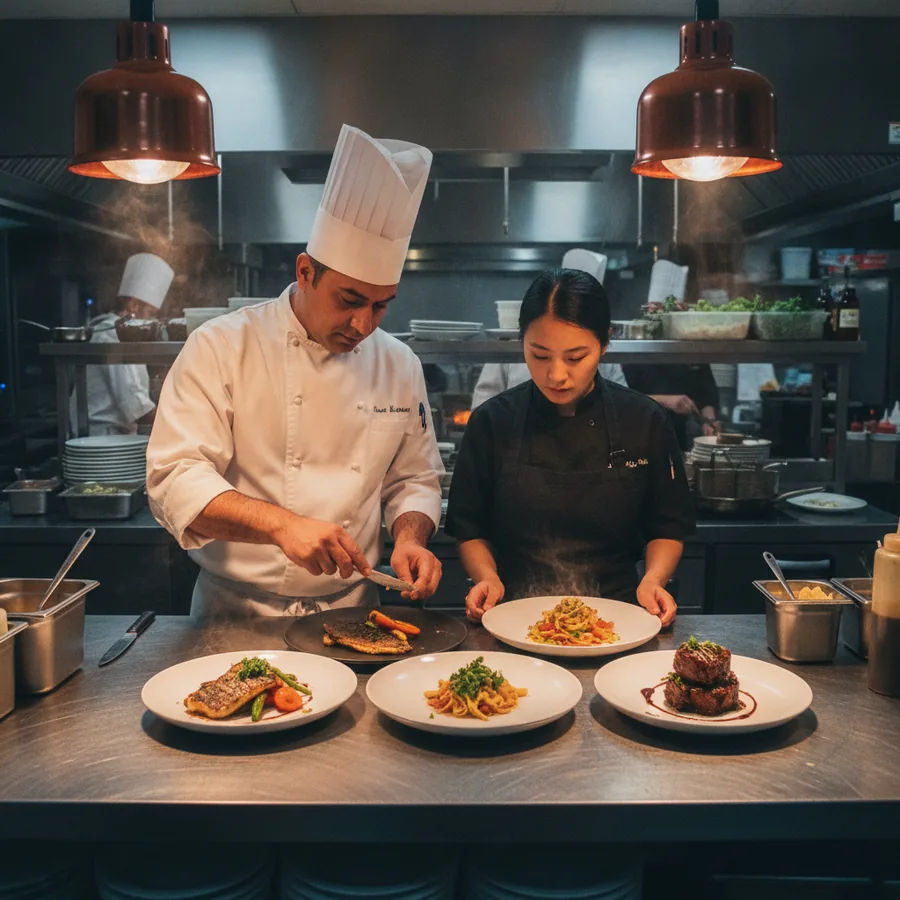
Business loans for restaurants and catering companies
Cash in a restaurant sits in inventory, payroll, and rent before it ever reaches the bank, and a slow week or a broken oven won't wait for it to come back.
FundBetter gives restaurants and caterers flexible funding to smooth cash flow and handle whatever the service throws at you, with money in your account in as little as 24 hours, so you keep cooking while the problem gets solved.
Why restaurants need working capital
Thin margins, tight cash
Flexible capital helps you cover payroll and pay suppliers between busy periods, so the thin buffer left by food and labor costs never puts service at risk.
Equipment that must run
When an oven, cooler, or hood goes down, financing gets it fixed or replaced fast, so a failed unit never shuts your kitchen down mid-service.
Landing the big booking
Say yes to a large catering contract or event, with the cash to staff up and buy supplies in advance instead of turning the booking away.
How lenders evaluate a restaurant
Understanding how a lender reads your restaurant is what lets you fund on your terms, and it starts with a number most owners already track weekly: prime cost. Food cost plus total labor commonly lands between 55 and 65 percent of sales. Add occupancy, which for many full-service rooms runs 6 to 10 percent before utilities, and what remains is thin. A restaurant holding a mid single-digit net margin is running a healthy operation.
A thin margin isn't weak credit. It means your buffer is small, so timing matters more here than in almost any other trade. A walk-in that fails on a Friday, payroll the week before a slow stretch, or a catering deposit due before the client pays all create a gap unrelated to whether the restaurant is profitable.
What works in your favor is settlement. Card sales batch out daily, giving an underwriter a near real-time read on revenue that most industries can't offer. Rather than waiting on year-end financials, a lender reviews four to six months of bank statements and watches cover counts turn into deposits week by week. Consistent settlement is often worth more to an approval than a strong credit score.
What weighs most is existing debt service. Other advances already debiting the account reduce the room left for anything new, and rent as a share of sales gets read against the same thin margin. Seasonality itself is expected, not penalized, which is why products that flex with sales such as a merchant cash advance are common here, while fixed payments suit assets bought through equipment financing.
Merchant cash advance vs. equipment financing
These are the two products restaurants use most, and picking the right one decides whether you keep cash flexible or lock in a kitchen asset. One covers a working capital gap, the other buys a piece of the kitchen.
| Merchant cash advance | Equipment financing | |
|---|---|---|
| What it funds | Anything. Payroll, food cost, rent, a slow month, a catering deposit. | One asset. The oven, walk-in, hood, or van, which is also the collateral. |
| How you repay | A holdback of 5 to 20 percent of card settlement, taken before money reaches your account. | A fixed payment over 1 to 6 years. |
| Cost basis | A factor rate. $50,000 at 1.3 means $65,000 repaid, fixed the day you sign. | An interest rate over a term, so early payoff generally reduces what you pay. |
| Typical size | $5K to $500K, sized against card volume. | Up to 100 percent of equipment cost, install included on most kitchen builds. |
| Speed to funding | As little as 24 hours. | A few days, once the vendor quote is confirmed. |
| Effect of a slow month | The payment shrinks with sales, because it is a percentage. | The payment does not move. February costs the same as December. |
| Who it suits | Card-heavy rooms with a short, urgent gap and margin to absorb the holdback. | Any kitchen buying a durable asset it will use for years. |
What restaurants and caterers finance
Funded projects in this trade fall into a handful of categories, and funding lets you handle each without pulling cash out of daily service.
Kitchen hood, ventilation, and fire suppression
Rarely discretionary. Hoods come up at inspection, on a menu change that adds a fryer or char grill, or when suppression fails certification. Install often costs more than the unit, and financing covers both so a failed certification never stops you serving.
Walk-in refrigeration and the kitchen cold line
A failed walk-in is an emergency with a spoilage bill attached, so financing compressors, walk-in boxes, reach-ins, and blast chillers over the years the unit will run keeps the cold line running without draining your account.
Restaurant POS and order routing
Financing a point-of-sale replacement covers terminals, kitchen display screens, floor handhelds, and the labor to configure menus and modifiers. Newer systems also feed the online ordering and delivery channels now carrying real volume, so the upgrade pays you back in orders.
Dining room buildout and renovation
Seating layout, bar construction, flooring, and patio enclosure change how many covers you turn in a night. Renovation is one of the few restaurant investments that raises capacity and average check together, which is why funding it can pay for itself. A project that size usually suits long-term business loans, because the return arrives over years rather than months.
Catering vans and off-site equipment
Off-premise work needs refrigerated transport, hot boxes, chafing setups, and portable ovens. Financing a van against the vehicle keeps your working capital free for the food and labor each booking consumes upfront.
Payroll through the slow season
Holding a trained line cook and reliable front-of-house through a quiet quarter costs less than rehiring in spring, and funding is what lets you keep them. Working capital that flexes with sales, such as revenue-based financing, is often what makes keeping the crew possible.
When a merchant cash advance fits a restaurant
An advance is the fastest money available to a restaurant and among the most expensive, so it earns its place when speed decides the outcome. On a thin margin, the holdback percentage deserves as much scrutiny as the total cost.
When an advance works for a restaurant
- Card sales are most of your revenue, so the holdback tracks what the room is actually doing.
- The need is short and specific. A failed cooler, payroll before a big weekend, a catering deposit due before the client pays.
- A slow month reduces the payment instead of breaking it, because repayment is a percentage.
- Speed decides the outcome. Funds can arrive in as little as 24 hours.
- Prime cost leaves room, so a 5 to 10 percent holdback still lets you pay food and labor on schedule.
When a restaurant should pass on an advance
- The cost is high. A 1.3 factor rate on $50,000 is $15,000, and early payoff usually does not reduce it.
- Prime cost already runs above 65 percent. A 15 to 20 percent holdback on a room that tight can force you to short suppliers.
- You are buying equipment. A hood or walk-in belongs on a term matching the years it will serve.
- Revenue is mostly cash, checks, or invoiced catering receivables. There is little settlement to hold back from, and invoice factoring fits event receivables better.
- You need 18 months of runway. Advances clear in months, so the pressure lands in a short window.
- You are weighing a second advance to service the first. Stacking is the most common way a thin-margin kitchen gets into real trouble, and needing it signals the first advance was wrong.
Best ways to use restaurant business loans
Kitchens rarely borrow for abstract reasons.
Funding options for restaurants and caterers
A dining room with heavy card volume, a caterer waiting on invoiced events, and a kitchen replacing a walk-in all need different products.
Merchant Cash Advance
Heavy card volume at the table makes daily repayment fit how the dining room earns.
Learn moreBusiness Lines of Credit
Keep a line open for produce orders and payroll in the weeks between busy nights.
Learn moreEquipment Financing
Replace a walk-in, a hood, or a range without draining the operating account.
Learn moreShort-Term Business Loans
Fund staffing and supplies for a large catering contract, then repay after the event settles.
Learn moreWho qualifies for restaurant business loans?
Approval leans on your sales record and deposit consistency rather than your credit file alone. Most funded restaurants look close to this.
Frequently Asked Questions
What do lenders look at on a restaurant bank statement?
Four to six months of your statements usually decide it. The reviewer checks how often you deposit and how large the deposits are, how far your volume swings between busy and slow weeks, how many days the account ran negative or drew overdraft fees, and whether other loans or advances are already debiting the same account. Existing daily or weekly debits carry the most weight, because they reduce the room left to service anything new.
Can a new restaurant get funding before it has a full year of sales?
Often yes. Most options here open up once you're 6 or more months in business with roughly $15,000 in monthly revenue, because daily card settlement gives an underwriter a usable read on your restaurant well before annual financials exist. Below that threshold your realistic route is equipment financing, where the asset itself secures the deal, or funding tied to a personal guarantee.
How does a merchant cash advance holdback affect restaurant cash flow?
The holdback is taken from card settlement before the money reaches your operating account, so it comes out ahead of food, labor, and rent. The percentage is fixed. What's left for suppliers isn't. Model the holdback against your slowest recent month, not your best one.
Can a catering company get funding when clients pay on invoice terms?
Yes, and the product you use usually differs from what a dining room would. Catering ties up your cash upfront on food, rentals, and staff while the balance sits in receivables for 30 to 60 days. Invoice factoring advances against those unpaid event invoices, and a line of credit covers your deposits and staffing between bookings. A card-based advance fits poorly when most of your revenue is invoiced.
Is it better to finance or lease restaurant equipment?
Financing builds ownership, so at the end of the term the oven or walk-in is yours with no further payments. Leasing keeps the monthly figure lower and makes replacement easier on equipment that dates quickly, such as POS hardware. For long-lived kitchen assets that will outlast the term, ownership is generally the better value. We can price both before you decide.
Can I get funding to open a second restaurant location?
Yes. A second location is usually funded on the trading record of your first, which is why the paperwork moves faster than it did for your original opening. Buildout, kitchen equipment, and the first months of payroll are often split across products, with equipment financed against the assets and working capital covering the ramp until the new room fills its covers. If you're planning a full buildout, it's worth pricing SBA loans as well, because the longer term keeps your payment low while the room fills.
Other industries we fund
We know the cash-flow realities of 22 industries. If yours is not Restaurants & Catering, chances are we fund it too.
Fuel growth with restaurant business loans
Tell us what the kitchen needs and see real options in minutes, with funds available in as little as 24 hours.