Solar Business Loans
Get the capital to buy equipment, staff crews, and cover the wait until the solar job pays.
Funding for the solar installation business, not consumer solar loans. Once approved, money can land in as little as 24 hours.
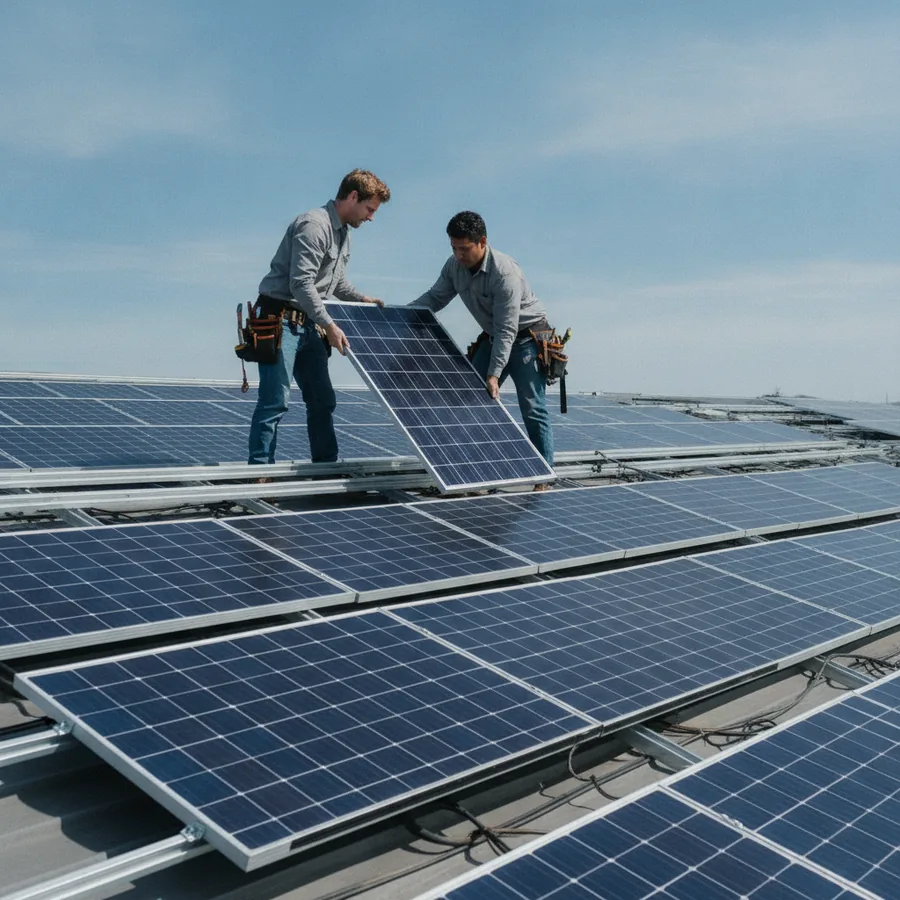
Solar business loans for installation companies
Take on more solar jobs without waiting to get paid first. Solar work asks you to spend big up front: panels, inverters, racking, and permits all come out of pocket weeks before a system switches on and the rebates catch up. FundBetter closes that gap so you can grow the install schedule without draining the bank account.
We fund solar companies of every size with one application and advisors who know the payment cycle. You can quote the next project knowing the equipment is covered.
Why solar installers need working capital
Equipment costs upfront
Buy panels, inverters, and racking long before the customer pays, without letting that upfront spend cap how many jobs you run at once.
Waiting on rebates
Keep installing while rebates and incentive programs pay on their own slow schedule, well after the equipment invoice comes due.
Payroll on long projects
Keep your best installers on the roof through a long install. Crews are on payroll every week, but a job can take months to reach its final invoice.
How the solar project cash cycle works
Financing the solar installation business puts capital behind your crews and equipment, not a consumer solar loan for a homeowner buying a system. If you order the panels, pull the permits, and put crews on roofs, this was written for you.
The trouble is the shape of a solar project. You order panels, inverters, racking, and the rest of the balance of system, and you pay for most of it before a single module goes up. Then the calendar takes over. Permitting sits with the local authority for weeks. Interconnection approval runs on the utility queue, not on yours. Inspection has to be scheduled, and a failed inspection sends you back around the loop. Permission to operate arrives when the utility says it does.
Only after that whole chain closes does the final payment land, whether it comes from the homeowner, a commercial customer, or a milestone release from your financing partner. A residential job can run a few months from deposit to final funding. Commercial and small utility scale work takes longer.
Signed contracts aren't cash. Ten sold jobs waiting on interconnection is ten sets of equipment already paid for and nothing collected against them. That's how an installer coming off the best sales quarter in company history ends up short on payroll. On commercial work billed to a business or a general contractor, invoice factoring can pull that final payment forward once the invoice is issued.
Equipment financing vs. a business line of credit
These two products solve different problems in a solar business, and most growing installers end up using both. Equipment financing buys assets you keep. A business line of credit covers the gap while a job crawls toward permission to operate.
| Equipment financing for solar | Line of credit for solar | |
|---|---|---|
| What it funds | Assets that stay on your books: crew trucks, trailers, lifts, forklifts, tooling, and warehouse racking. Buying the warehouse building itself calls for SBA loans instead. | Everything that is not a hard asset: payroll, permit and plan review fees, subcontracted electrical, and deposits on panel and inverter orders. |
| Timing against project milestones | One approval per purchase, funded when you buy the asset, then repaid on a fixed schedule that ignores your milestone calendar entirely. | Drawn the week a supplier deposit is due and paid back when the milestone payment clears, so the balance rises and falls with your pipeline. |
| Cost pattern | A fixed payment spread across the useful life of the asset, so a bucket truck is not paid for out of one install. | Interest applies only to what you have drawn, so a line sitting idle between install seasons costs nothing to keep open. |
| Collateral | The equipment itself usually secures the deal, which keeps approval reachable for younger solar companies. | Typically underwritten against revenue and job volume rather than a specific pledged asset. |
| Who it suits | Installers adding crews and needing vehicles, lifts, or more warehouse footprint before the next hiring push. | Installers whose real bottleneck is the wait between paying for equipment and receiving permission to operate. |
What solar installers finance
A solar balance sheet is heavy on things you buy before you bill, and funding covers them.
Solar panel and inverter inventory
Hold panel and inverter stock so you can quote a firm price instead of a lead time. Module and inverter pricing moves, and so do lead times, so buying ahead of a price change or a supply squeeze is often cheaper than buying job by job, even though capital sits in a warehouse for weeks. Financing lets you carry that stock without starving payroll.
Racking and mounting hardware
Stock enough racking and mounting hardware to keep crews from stalling on a partial delivery. Roof type rewrites the bill of materials, and comp shingle, tile, standing seam, ballasted flat roof, and ground mount piles each need different rails, flashing, and attachments. Carrying the mix your pipeline calls for keeps every job moving.
Crew trucks and lifts
Add a crew without tying up cash. Adding a crew means adding a vehicle, and often a trailer, a boom or material lift, and a second set of tools. These are exactly the assets equipment loans are built for.
Battery storage stock
Keep a battery in stock so you close the storage add-on at the kitchen table instead of losing it to a competitor who can install sooner. Storage attach rates keep climbing, and a battery is a large single purchase, so having one or two on hand pays for itself.
Crew certification and training
Fund the certifications that win commercial bids before the work they earn arrives. NABCEP certification, electrical licensing, manufacturer training for inverters and batteries, and fall protection training all cost money and take crew hours off the roof, but certified crews win commercial bids and pass inspection more often, so the spend usually pays back.
Pros and cons of solar business loans
Use funding as a timing tool and it pays for itself. It closes the gap between what a solar job costs today and what it pays months from now, but it doesn't create demand.
A good fit for a solar installer
- You hold signed solar contracts with deposits collected, and the only missing piece is cash to place the equipment order.
- Your permitting and interconnection wait is long but predictable, so you can match the repayment term to the months you actually sit in the queue.
- You are turning down installs because equipment for jobs you already sold has tied up the operating account.
- Panel or inverter pricing is moving, and buying ahead costs less than buying on demand once the job is scheduled.
- You want a battery in stock so storage attachments close on the spot instead of waiting on a supplier.
A poor fit for a solar installer
- Your solar pipeline is thin and the money would cover overhead rather than jobs already sold. Financing does not fix a sales problem, it enlarges it.
- Cancellation risk on your signed jobs is high. Equipment ordered against contracts that fall through leaves you paying for stock with nowhere to install it.
- You are counting on incentive or rebate timing you have not verified. Program terms and schedules change, so confirm the current rules with the administering agency or utility before building them into a repayment plan.
- You need daily or weekly repayment to work against milestone payments that land months apart. A merchant cash advance rarely suits solar for exactly this reason.
- The margin on the work is already thin. Financing cost has to come out of a spread wide enough to carry it.
Best ways to use solar business loans
Most solar borrowing is spent before a module is ever bolted down.
Funding options for solar installation companies
Equipment purchases, permit fees, and payroll across a long install do not behave the same way, so they rarely belong on the same product.
Equipment Financing
Finance panels, inverters, and install vehicles with the hardware carrying the loan.
Learn moreLong-Term Business Loans
Warehouse space and fleet expansion repay over years rather than a single install season.
Learn moreBusiness Lines of Credit
Cover permitting fees and crew payroll across a long install before the customer pays.
Learn moreShort-Term Business Loans
Bridge the stretch between signed contract and final inspection on a fixed payback window.
Learn moreWho qualifies for solar business loans?
Approval leans on your revenue and your signed job pipeline rather than years in business alone. Most approved solar companies look close to this.
Frequently Asked Questions
Is this a solar loan for homeowners buying panels?
No. FundBetter funds the solar installation business, not the end customer. If you own or run the company that buys equipment, pulls permits, and installs systems, you're in the right place. If you're a homeowner looking to finance a system on your own roof, your installer or a consumer solar lender is the place to start.
Can I get funded while jobs are stuck in permitting or interconnection?
Yes, and that stretch is one of the main reasons installers borrow. Underwriting looks at your revenue history and your signed pipeline rather than requiring completed jobs. A line of credit fits this well, since you can draw when the equipment order goes in and pay down once permission to operate clears and the final payment arrives.
How do milestone payments from my solar financing partner affect funding?
Milestone releases spread your revenue across the job, which changes when cash actually arrives even though the contract value is set. Bring your milestone schedule to the conversation. Matching the repayment structure to when those releases land is more useful than borrowing more, and it keeps payments from arriving ahead of the money that covers them.
Can I finance battery storage inventory before I have sold the batteries?
Yes. Holding storage stock is a common use of a line of credit, because attach rates are strong enough that batteries usually move. Be honest about your own close rate on storage. Financing inventory you sell within a season works well. Financing inventory that sits for a year is an expensive way to hold a shelf.
Do panel and inverter price swings change what I should borrow?
They change the timing more than the amount. When pricing or lead times are moving against you, buying earlier protects the margin you quoted, and short term borrowing to do that can pay for itself. When supply is steady and pricing is flat, buying job by job keeps capital free and avoids carrying stock you don't need yet.
Does the equipment I install for customers count as collateral?
Generally no. Panels, inverters, and racking leave your books once they're on a customer roof, so they don't secure a loan the way retained assets do. Trucks, lifts, trailers, and warehouse equipment stay yours and can secure equipment financing. Working capital for the installed materials is usually underwritten on revenue instead.
Other industries we fund
We know the cash-flow realities of 22 industries. If yours is not Solar Panel, chances are we fund it too.
Accelerate growth with solar business loans
Tell us about your pipeline and your equipment needs. One of our funding advisors who understands the permitting and interconnection wait will walk you through the options.